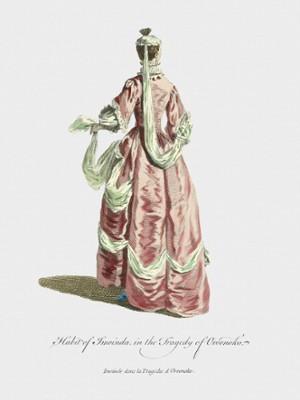
The representation of Imoinda in Thomas Jefferys’ engraving is not limited to that of an individual person. Instead, it serves as a symbolic portrayal of the noble captive. This artwork was published in Jefferys' book A Collection of the Dresses of Different Nations, thus representing the perception of African royalty among the European public of the 18th century.In contrast to the harsh realities of the Atlantic Slave Trade as mentioned in Behn’s novel, the representation of Imoinda in Jefferys' engraving is embellished by flowing drapery and classical attire that speaks of her royal background. Her demeanor seems both tragic and poised, thus representing the combination of the scientific interest in other peoples common in the Age of Enlightenment and the theatrical tradition of London theatre.