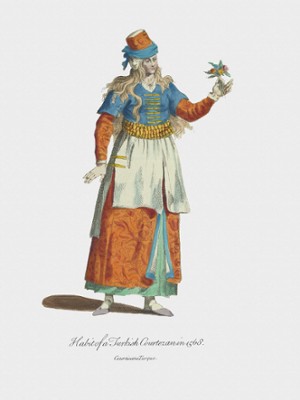
In 1568, the engraving "Habit of a Turkish Courtezan" produced by Thomas Jefferys provides insight into the Elizabethan fascination with the "oriental otherness." Though it captures the dress shape of the Ottoman fashion, it may be viewed from a western perspective due to the curiosity and morals attached to the Eastern culture.This particular engraving shows the dress codes of an upper-class Ottoman female in the 16th century. The figure is illustrated in a multi-layered dress style, blending the elements of dignity with the extravagance that was common during the Golden Age of the Ottoman Empire.The key features of the Ottoman lady's clothes include kaftan (robe) with long sleeves on top of a light chemise and large şalvar (trousers). An outstanding element is the unique headwear called hennin – a tall hat covered with expensive silk or muslin fabric. The image by Jefferys successfully combines the rigidity of the class system present in Istanbul and the luxurious fabrics typical of that age.