
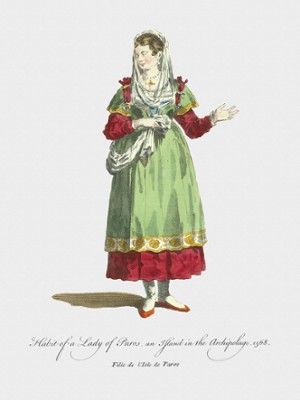
This engraving of 1568, well-known for its appearance in the 18th-century work of Thomas Jefferys, provides an excellent ethnographic insight into the Aegean in the period of the Renaissance. The work displays the Habit of a Lady of Paros, which presents the visual characteristics of the Cyclades in the era defined by the cross of Latin presence and Turkish Greeks traditions.Even though the engraving found popularity with Thomas Jefferys' works titled A Collection of the Dresses of Different Nations between 1757-1772, its actual sources are much older. In 1568, Paros saw the synthesis of several cultures that were represented through the "Lady of Paros." The lady herself is easily identified by her voluminous layers of garments and a magnificent headdress made of silk and linen in order to represent her modesty and nobility.