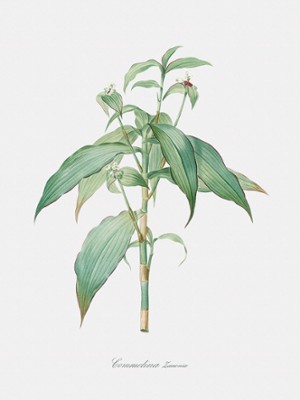
This fine colored stipple engraving is a wonderful example of botanical art during the Age of Enlightenment, featuring the "Comméline de Zamoni" (botanical name: Commelina Zanonia or Campelia Zanonia; also commonly referred to as "Mexican Flag"). This remarkable piece of artwork is designed by none other than the renowned Pierre-Joseph Redouté, who earned himself the title of the “Raphael of Flowers,” and is part of his famous empire period masterpiece work, Les Liliacées (Paris: 1802–1816).It is worth noting how Redouté's brilliance and skill in stipple engraving is wonderfully reflected in the creation of this print. Stipple engraving involves creating images through printing ink dots, and thousands of them were used here in order to imitate the natural gradients present in Redouté’s original hand-colored vellum watercolors. The current stipple engraving is one of those plates that shows an elegantly arched plant stem with green leaves and deep-colored flowers.