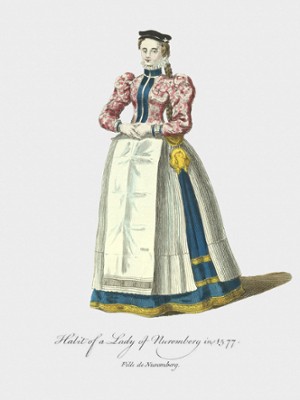
This beautiful etching shows the grace and elegance of an upper-class woman from Nuremberg during 1577. The lady wears the ornate gown that was typical of the German Renaissance period; thus, she perfectly reflects the “Sumptuary Laws” prevalent during her time. These laws were such that even the smallest details on her dress spoke volumes about her exact social position.Designed initially by Hans Weigel but later re-engraved for Thomas Jefferys’ landmark book A Collection of the Dresses of Different Nations in the 18th century, this plate represents the shift in fashion styles from the late Gothic period to the early Baroque period. Notice how the Steuchlein (starched linen cap) and the pleated overcoat were distinctive features of the Nuremberg “Patrician.”